
Wellness Shift: Meaning Over Measurement in 2026
A decade of tracking every heartbeat and sleep cycle is giving way to a wellness culture valuing catharsis and sensory pleasure over data — even as sleep-tech wearables keep pushing the other way.
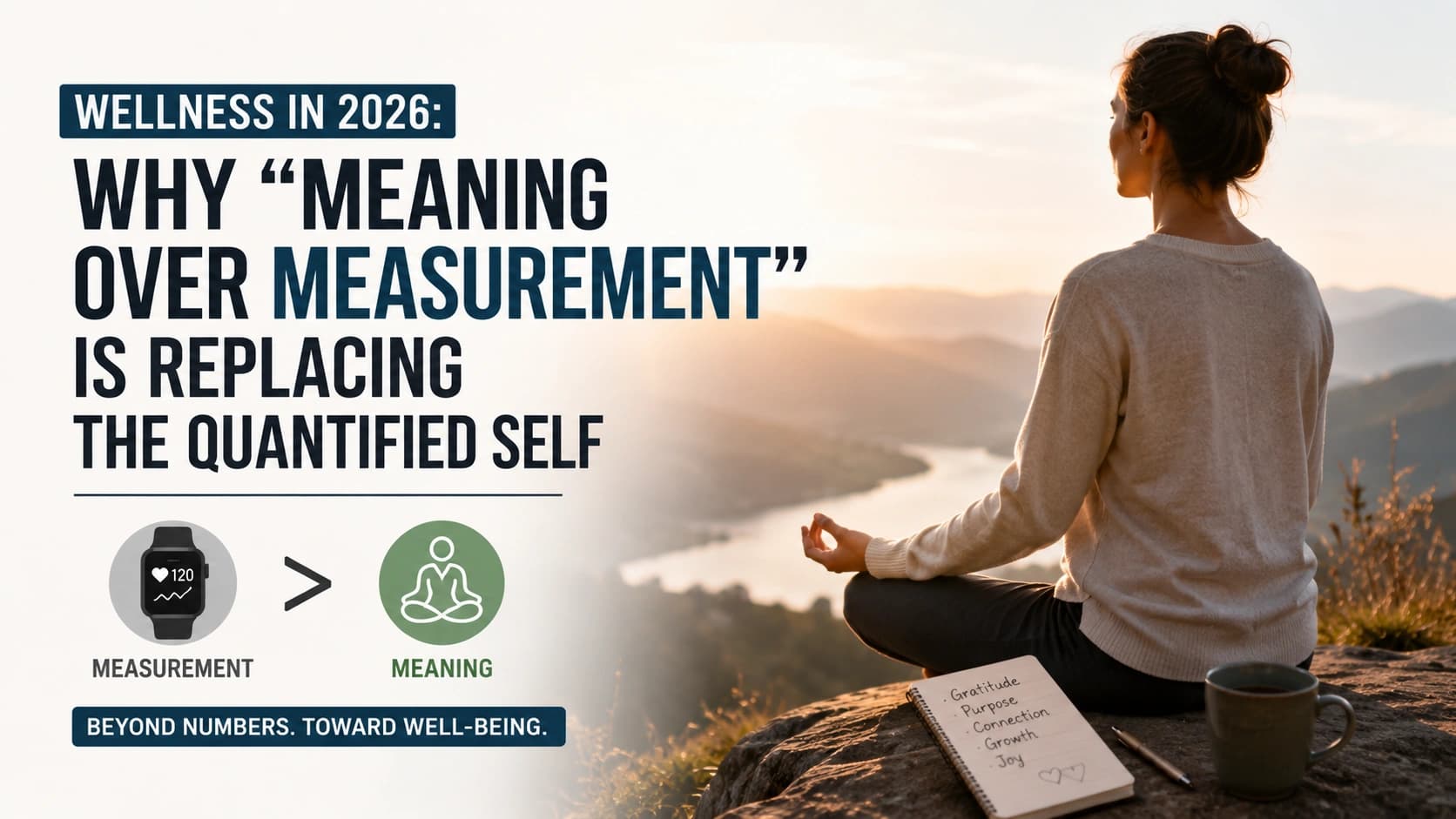
For the better part of a decade, the loudest idea in wellness culture has been a simple one: track it, and you can improve it. Step counts, sleep scores, heart-rate variability, continuous glucose monitors worn by people with no diabetes risk at all — the "quantified self" movement turned wellbeing into a stream of data, on the theory that visibility into your own biology was the fastest route to optimising it. In 2026, that theory is being quietly, and not so quietly, questioned.
The Pivot The Wellness Industry Is Naming Out Loud
The Global Wellness Institute's list of ten wellness trends for 2026 puts this shift in unusually direct language. Wellness experiences, the report argues, will increasingly embrace people as "imperfect, emotional, relational and sensory" — hardwired to seek pleasure and joy rather than to relentlessly self-optimise. The report's own framing is blunt: a pivot toward "meaning over measurement, catharsis over clinical data, self-expression over self-surveillance."
That is a notable thing for an industry built substantially on wearables, apps and precision diagnostics to say about itself. It reflects a genuine fatigue that has become visible in consumer research: survey data cited by wellness researchers this year found that among Americans looking to change their wellness routines, a clear majority said they were simplifying their approach, focusing on baseline habits like quality sleep, regular movement and foundational nutrition — more than double the share pursuing advanced optimisation strategies. In plain terms: after years of being told to track everything, a meaningful share of people are choosing to track less and simply do more of the basics.
Wellness offerings will pivot to meaning over measurement, catharsis over clinical data, self-expression over self-surveillance — Global Wellness Institute, 2026 trends report.
Soft-Care, Reframed As Nervous-System Medicine
One of the more interesting threads in this year's wellness conversation is the re-framing of practices that have long been dismissed as soft or unscientific — breathwork, touch therapy, yoga, the Feldenkrais method — as legitimate interventions for nervous-system regulation. According to coverage of the Global Wellness Summit's ongoing trend analysis, these approaches are increasingly recognised for measurable effects on the body's stress-response systems, making them more mainstream, more repeatable in clinical and spa settings alike, and in some contexts even formally prescribed by practitioners.
This is a genuinely different framing from the wellness industry's recent past, where such practices were often marketed on vague promises of relaxation. The shift toward treating them as nervous-system interventions with measurable physiological effects — even while the broader trend argues against over-quantification — captures a central tension in 2026's wellness culture: less individual data-tracking, but more scientific legitimacy for practices that used to sit outside the mainstream.
Where The Trend Runs Into Its Own Counter-Trend
Here is where the "meaning over measurement" narrative gets complicated: 2026 is simultaneously one of the biggest years yet for wellness technology that measures more, not less. Trend-tracking research into July's health product launches highlights a wave of AI-powered sleep lamps designed to mimic natural daylight cycles, alongside a new generation of real-time sleep-support wearables built to regulate sleep quality continuously through the night. Neither of those categories is exactly an exercise in letting go of measurement.
Longevity skincare shows a related, if subtler, version of the same tension. Rather than the blunt anti-aging promises of previous years, the category has shifted toward framing skin health as something to be maintained and monitored for resilience over time — language that still implies tracking and precision, even as it moves away from the aesthetics-first framing of the past. And the broader "wellness as infrastructure" thesis circulating in industry commentary — the idea that wellness should function as an operating system for daily life rather than an aspirational add-on — leans, if anything, toward more systematic self-management, not less.
2026 Wellness, At A Glance
| Trend Direction | What It Looks Like |
|---|---|
| Meaning over measurement | Simplified routines; focus on sleep, movement, nutrition basics; less app-based tracking |
| Catharsis over clinical data | Breathwork, touch therapy, yoga reframed as nervous-system medicine |
| Self-expression over self-surveillance | Wellness as personal ritual and pleasure, not performance metric |
| Counter-trend: sleep tech | AI daylight-mimicking lamps, continuous sleep-regulation wearables |
| Counter-trend: longevity skincare | Long-term skin resilience framing, still data- and ingredient-driven |
How To Read The Contradiction
The apparent contradiction resolves once you separate what people say they want from what the market is willing to sell them. Consumer fatigue with constant self-tracking is real and well documented, and it is producing a genuine cultural shift toward simpler, more embodied, less metric-obsessed approaches to daily wellbeing — the yoga mat and the breathwork session rather than the dashboard. At the same time, the wellness technology industry, facing its own competitive pressures, continues to innovate in exactly the data-rich direction that the cultural mood is turning away from, because sleep tracking and skincare diagnostics remain commercially lucrative categories regardless of the broader sentiment shift.
The likely resolution, playing out already in how these products are marketed, is technology that quantifies quietly in the background — an AI sleep lamp that adjusts light automatically rather than demanding you check a sleep score every morning — while the foreground experience is sold on feeling, ritual and pleasure rather than on the data itself. Measurement has not disappeared from wellness; it has moved backstage, while meaning takes the spotlight.
What This Means For Anyone Trying To "Do Wellness" In 2026
For the average person navigating this shifting landscape, the practical takeaway is reassuring: you do not need a wearable for every metric to be doing wellness "right" this year, and the cultural tide is, if anything, moving in the direction of permission to simplify. A consistent sleep schedule, regular movement, real food, and practices like breathwork or yoga that regulate the nervous system without demanding a dashboard are, by the industry's own account, exactly where the momentum is heading. The technology that continues to proliferate — sleep lamps, wearables, skincare diagnostics — is worth using if it genuinely helps, but 2026's defining wellness idea is that it should not be a prerequisite for feeling well.