
Delimitation 2026: Why Redrawing Lok Sabha Seats by Population Threatens South India
Redrawing the Lok Sabha purely by population would punish the southern states that did what the nation asked — and reward those that did not. This is not arithmetic. It is a bargain between states that must be renegotiated, not imposed.
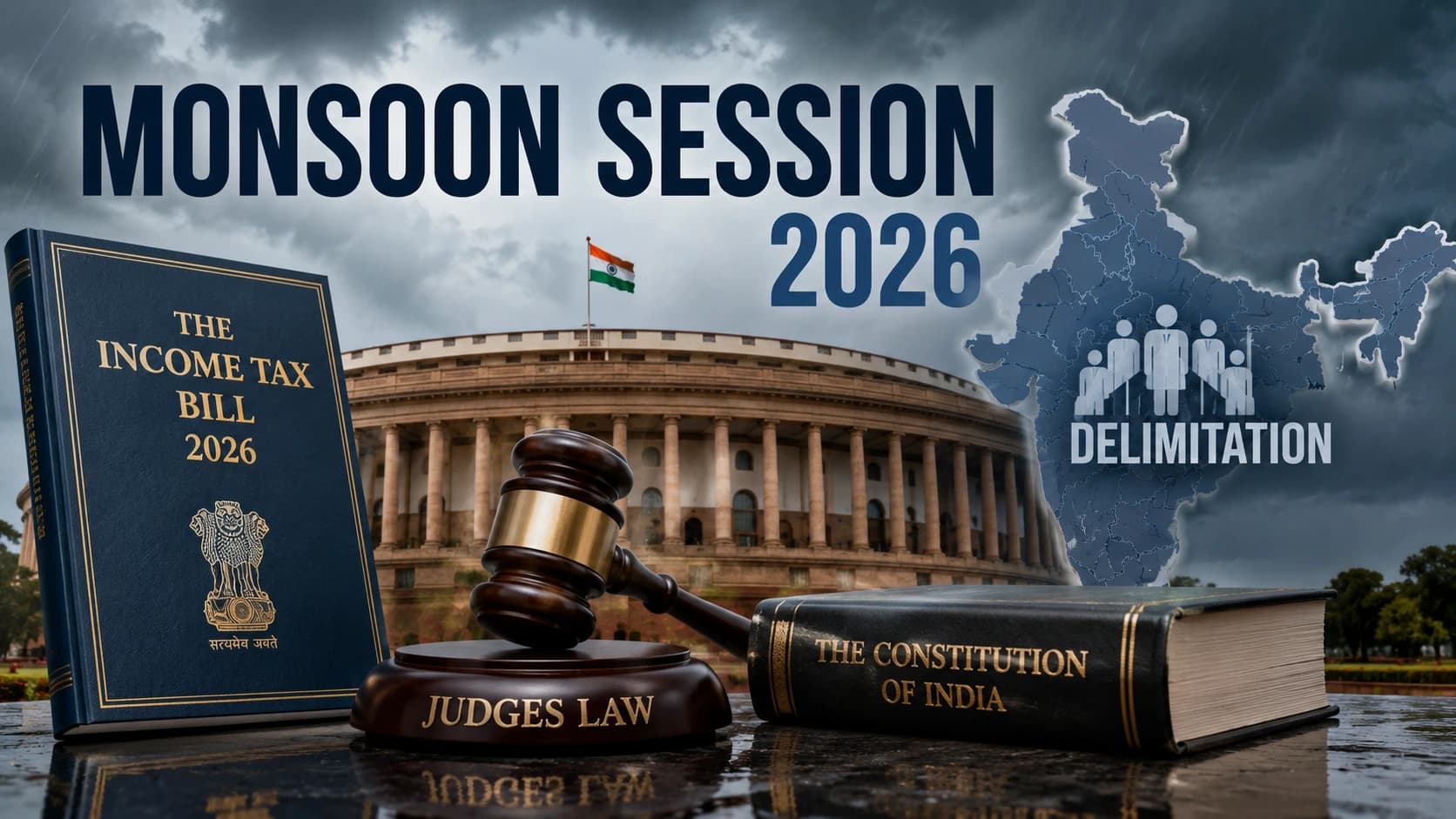
Every democracy tells itself a comforting story about representation: one person, one vote, counted equally. It is a fine principle, and India honours it. But representation in a vast, diverse federation is never only about counting heads. It is about the terms on which distinct peoples agreed to share a single Parliament — and those terms, once struck, cannot be unilaterally rewritten without unravelling the trust that holds the union together. That is why the coming exercise in delimitation, however it is dressed up in the neutral language of arithmetic, is not a headcount. It is a renegotiation of the constitutional bargain itself.
The proposal on the table would redraw India's Lok Sabha constituencies on the basis of the 2021 Census, and expand the House well beyond its current 543 seats — figures as high as 848 or more have been floated. On paper, it simply updates representation to reflect where Indians now live. In practice, it would penalise the states that did precisely what the nation asked of them, and reward those that did not. To pretend otherwise is to mistake a spreadsheet for a constitution.
The Bargain We Are About To Break
Begin with the history, because it is the heart of the matter. India froze the allocation of Lok Sabha seats to states on the basis of the 1971 Census, first through the 42nd Amendment and later extended by the 84th, deferring any population-based readjustment for decades. This was not an oversight or a bureaucratic delay. It was a deliberate, considered promise.
The freeze was designed to solve a genuine dilemma. India was urging every state to control its population growth, a national priority of the highest order. But if seats were reallocated by population, the states that succeeded in curbing their fertility would see their share of Parliament shrink, while those that failed would see theirs grow. A state would, in effect, be punished for heeding the national call. Freezing the seat allocation removed that perverse incentive: no state would lose political power for doing the responsible thing. That promise ran for decades, and states planned their futures around it.
The 1971 freeze was a bargain: control your population, and you will not lose your voice in Parliament for it. Delimitation on the 2021 Census would tear up that bargain retroactively — penalising the states that kept their side of it.
The South Did What It Was Asked
The states that would lose relative weight are, overwhelmingly, in the south. Tamil Nadu, Kerala, Karnataka and Andhra Pradesh drove down their fertility rates through decades of investment in health, female education and family planning. Tamil Nadu's total fertility rate sits around 1.7 and Kerala's near 1.8 — below the replacement level of about 2.1 — the demographic transition that policymakers everywhere hold up as a success.
The populous northern states travelled a different road. Uttar Pradesh, Bihar and Madhya Pradesh retained far higher fertility for far longer, and their populations grew accordingly. Under a purely population-based delimitation, Uttar Pradesh alone would command something in the order of 80 seats, its bloc of Parliament swelling while the southern states' share contracts. The states that succeeded at the national project of population control would be handed a smaller voice; the states that lagged would be handed a larger one. Whatever one calls that, it is not fairness.
This Is Not Only About Seats
The stakes run deeper than parliamentary arithmetic, because political weight and fiscal treatment are linked. The southern states already contribute disproportionately to the central pool of taxes relative to what they receive back through the devolution formula. They are, in the bluntest terms, net contributors subsidising poorer, more populous states — a redistribution they have largely accepted as the price of union.
But that acceptance rests on an implicit condition: that their political voice will not be diminished even as their money flows outward. Strip them of relative representation in Parliament while continuing to draw on their revenues, and you create a combustible grievance — taxation without proportionate representation, a formulation with a long and dangerous history. A south that feels it pays more, receives less, and is now to be outvoted on top of it is a south with every reason to question the fairness of the arrangement.
The Counter-Argument, Taken Seriously
It would be dishonest to dismiss the case on the other side, because it rests on a real principle. One person, one vote of equal weight is a democratic ideal. Today, because of the freeze, a member of Parliament from a populous northern state represents far more citizens than one from a smaller southern state, which means a northern voter's ballot carries less weight in the Lok Sabha. That is a genuine distortion, and the citizens of Uttar Pradesh and Bihar can fairly ask why their votes should count for less. Freezing representation forever, as their populations grow, is not a stable answer either.
This argument deserves respect, not caricature. A permanent freeze would eventually make the malapportionment untenable and would itself corrode the legitimacy of Parliament in the eyes of the under-represented. The status quo, extended indefinitely, is not a principled resting place.
Why The Counter-Argument Does Not Settle It
And yet "one person, one vote" cannot be the whole story in a federation, and here is why. India is not a unitary state in which citizens relate to the centre only as individuals. It is a union of states, and its stability has always depended on assurances to those states that they will not be reduced to permanent minorities within it. Every durable federation — through an upper house, weighted representation, or entrenched protections — tempers raw majoritarianism with guarantees to its constituent units. To insist that population alone must govern representation, and to override every other consideration, is to adopt a majoritarian logic that a diverse federation cannot survive.
There is also the matter of the incentive that a pure headcount creates going forward. If representation tracks population without qualification, the state is telling every region that people are political power, and that restraint in population growth is political self-harm. That is precisely the incentive the 1971 freeze was designed to kill. To revive it now would be to punish the demographic responsibility the nation spent decades encouraging.
The Alarm Is Already Sounding
The political temperature reflects these stakes. Southern chief ministers have warned against a delimitation that would erode their states' representation, and figures such as the NCP (Sharadchandra Pawar)'s Supriya Sule have signalled that any expansion must be examined carefully and negotiated rather than waved through. The Union government, for its part, has sought to reassure the south that an expansion model would let all states gain seats proportionately, so that none loses in absolute terms. But absolute numbers are not the point. Relative weight is. A state can gain seats and still lose power if others gain far more, and it is relative influence in a majoritarian chamber that determines whose priorities prevail.
What A Fair Settlement Looks Like
The way out is not to freeze representation forever, nor to impose a raw population count, but to treat delimitation as what it truly is — a renegotiation to be settled by agreement, with protections built in. Several mechanisms deserve serious consideration.
- Seat floors: guaranteeing that no state falls below a defined share of representation, so that demographic responsibility is not retroactively punished.
- Compensatory mechanisms: pairing any reallocation of Lok Sabha seats with strengthened protections elsewhere — a more empowered Rajya Sabha, entrenched fiscal guarantees on devolution, or constitutional safeguards for states' interests on subjects that matter most to them.
- A phased, negotiated timeline: any change of this magnitude should emerge from a genuine consultative process with the states, not a parliamentary majority exercised over their objections.
- Delinking money from the headcount penalty: ensuring that states which contribute disproportionately to central revenues do not simultaneously lose political voice, which would compound grievance with grievance.
These are not radical ideas. They are the ordinary instruments by which federations reconcile the equality of citizens with the security of their constituent units. India used one such instrument — the freeze — for decades. The task now is to design its successor.
The Real Question
Delimitation is being presented as a technical necessity, a mere updating of the map to match the census. That framing is precisely the danger. Treat it as arithmetic, and the south will rightly conclude that its decades of demographic responsibility bought it nothing but diminished power. Treat it as what it is — a renegotiation of the terms on which India's states share a Parliament — and there is a path to a settlement that is both fairer and more durable.
The choice is not between honouring "one person, one vote" and betraying it. It is between a narrow, majoritarian reading of that principle that a diverse federation cannot bear, and a richer understanding of representation that balances the equality of citizens with the trust of states. The one person, one vote objection is real and must be answered — but it is answered by negotiating floors and compensations that keep every region invested in the union, not by outvoting the south into resentful irrelevance.
A headcount can be done by a computer. A constitutional bargain requires consent. India would do well to remember the difference before it redraws its Parliament.